全球 AI 时报GLOBAL AI TIMES

Front page / 2026-11-14

XBot-Omni links multimodal understanding with speech, motion and facial expression

In a preprint submitted on November 12, AGIBOT X-Lab introduces XBot-Omni, an omni-modal model for robot interaction. It connects understanding of text, images, audio and video wit

Issue 2026-11-14 · By:无敌帅

In a preprint submitted on November 12, AGIBOT X-Lab introduces XBot-Omni, an omni-modal model for robot interaction. It connects understanding of text, images, audio and video with coordinated speech, body motion and facial expression. The paper illustrates interactions on PrimeBOT Q1 and AGIBOT X2 robots.
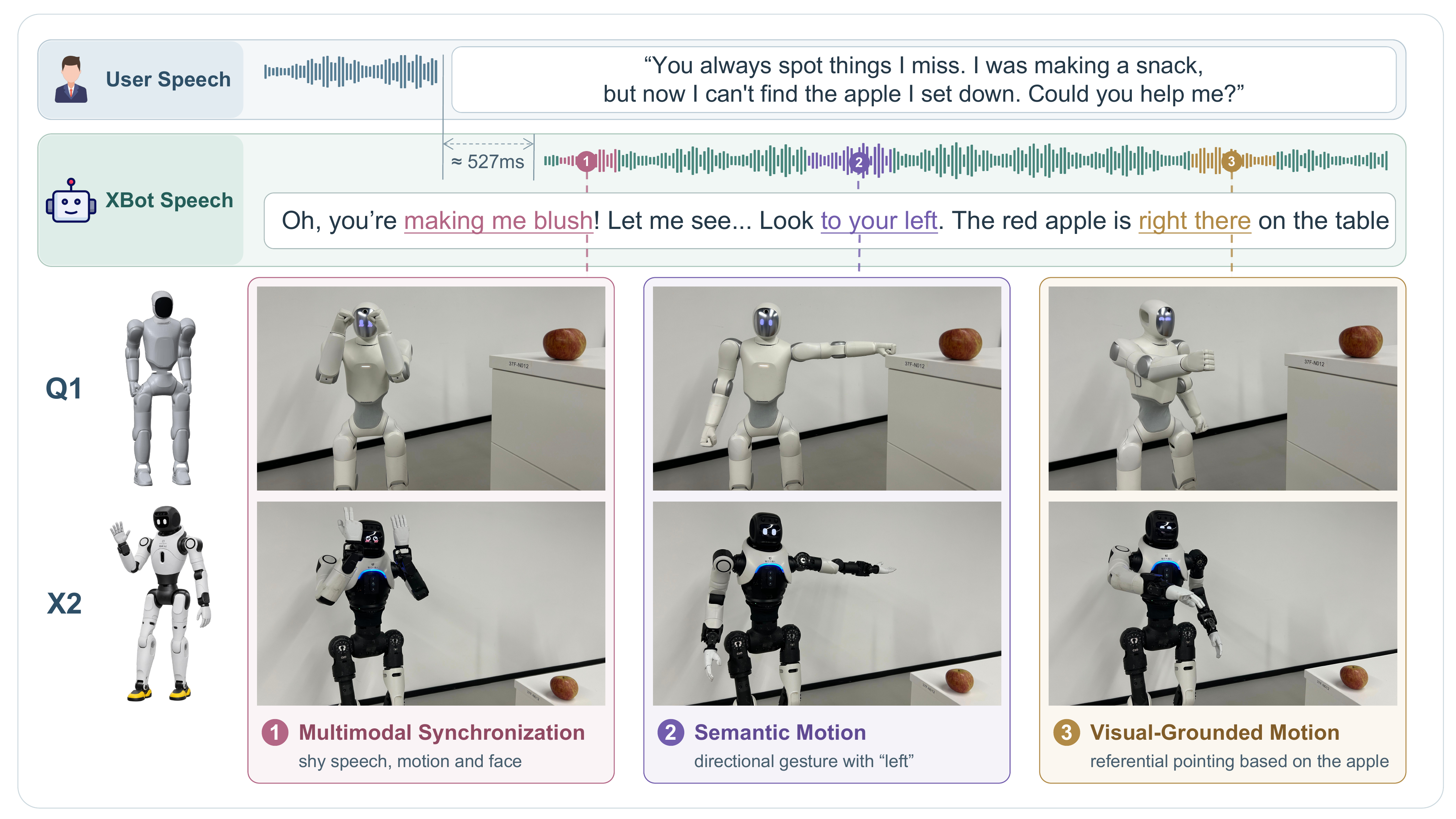
Figure 1. The paper’s demonstration composite combines robot examples and schematic elements. The three cases show synchronized expression, directional gestures and pointing toward an apple in the scene. The latency label is author-reported.
Research demonstration compositeFigure 1. The paper’s demonstration composite combines robot examples and schematic elements. The three cases show synchronized expression, directional gestures and pointing toward an apple in the scene. The latency label is author-reported. Image: Kerui Gu et al. / AGIBOT X-Lab · XBot-Omni Fig. 1 · CC BY 4.0Image sourceCC BY 4.0Changes: Full author-native PDF rasterized proportionally to display PNG; separate downscaled JPEGs. No crop or super-resolution.View full size (new tab)

Its Thinker–Talker–Actor architecture assigns dialogue and scene understanding to the Thinker and streaming speech generation to the Talker. The Actor uses their internal representations to generate body motion and facial expression. Semantic action control and speech–action alignment connect gestures with the spoken reference, such as pointing toward the apple being discussed.
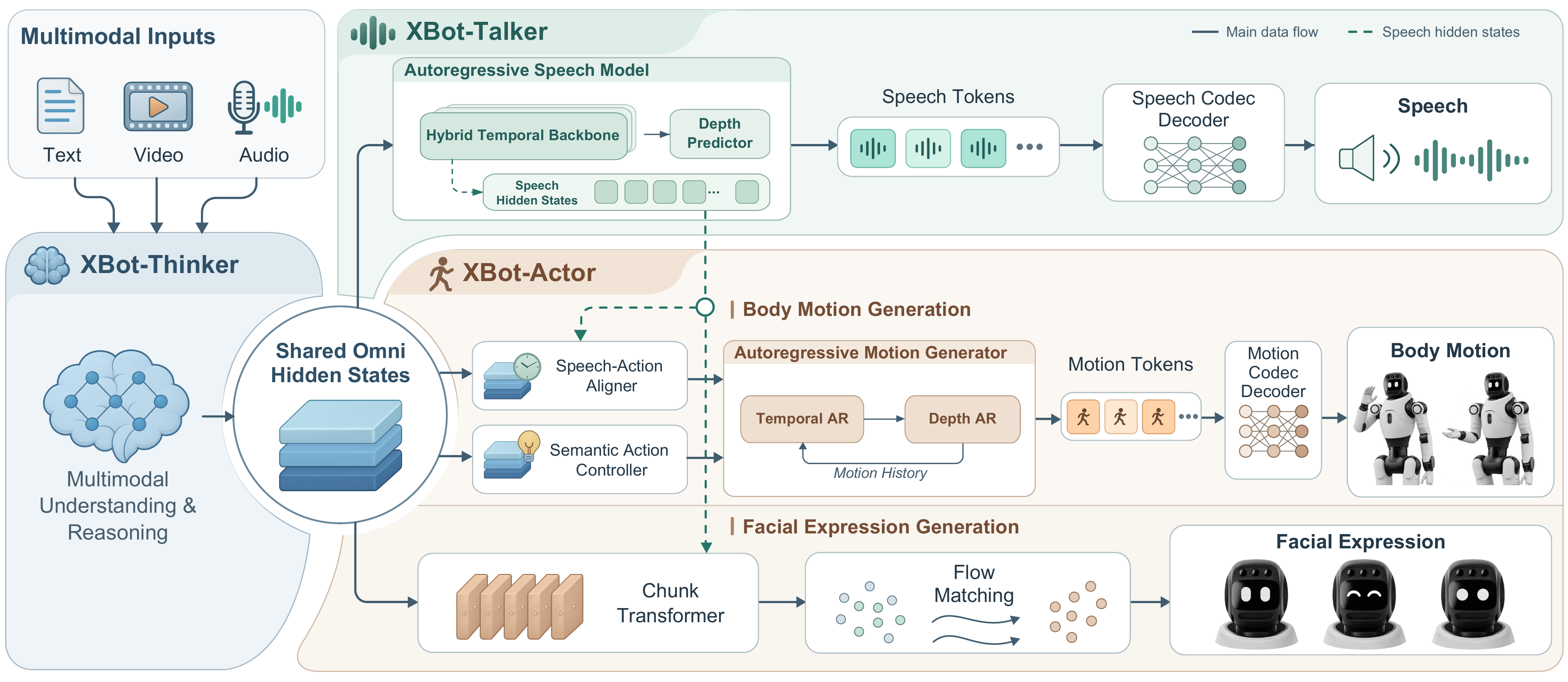
Figure 2. The authors’ Thinker–Talker–Actor architecture: semantic and scene context from the Thinker and speech-generation states from the Talker condition the Actor. Output illustrations are schematic.
Research architecture schematicFigure 2. The authors’ Thinker–Talker–Actor architecture: semantic and scene context from the Thinker and speech-generation states from the Talker condition the Actor. Output illustrations are schematic. Image: Kerui Gu et al. / AGIBOT X-Lab · XBot-Omni Fig. 2 · CC BY 4.0Image sourceCC BY 4.0Changes: Full author-native PDF rasterized proportionally to display PNG; separate downscaled JPEGs. No crop or super-resolution.View full size (new tab)

The authors report evaluation across seven benchmarks covering multimodal understanding, motion generation and visually grounded pointing. These are results under the team’s experimental settings. During this check, the project page still displayed “Coming Soon”; usable code, weights and deployment instructions have not been verified.

Sources and accountability

Editorial review completed.

  1. XBot-Omni · original paper v1 and submission record
  2. XBot-Omni · author project page

Open interactive reading view →